Area rugs · Auburn
Area rug cleaning in Auburn.
The rug is usually the most valuable thing in the room and the most easily ruined. It is worth handing to someone who will tell you the truth about it.
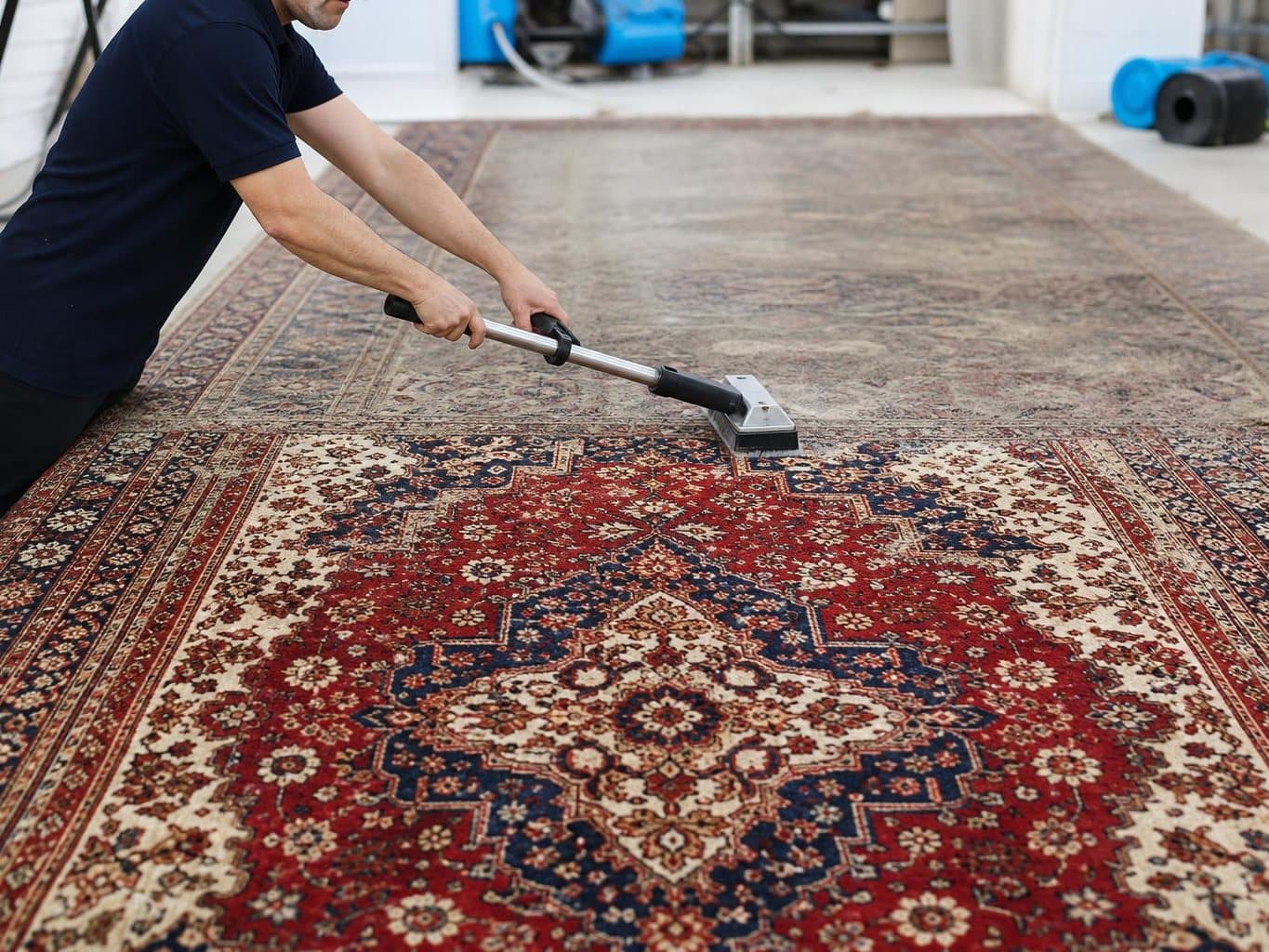
Oriental and antique rugs
A hand-knotted rug is not a manufactured product with known tolerances. It may be sixty years old, dyed with something that was never tested against a modern cleaning agent, and built on a cotton foundation that has quietly gone brittle. Two rugs that look similar can behave completely differently the moment they are wetted.
So the work starts with looking rather than cleaning: what the fibre is, how the dyes respond in a hidden corner, whether the foundation is still sound. If that inspection says a rug should not be wet cleaned, we will say so. That is a better outcome than a ruined rug and an apology.
Coming to Auburn for a rug
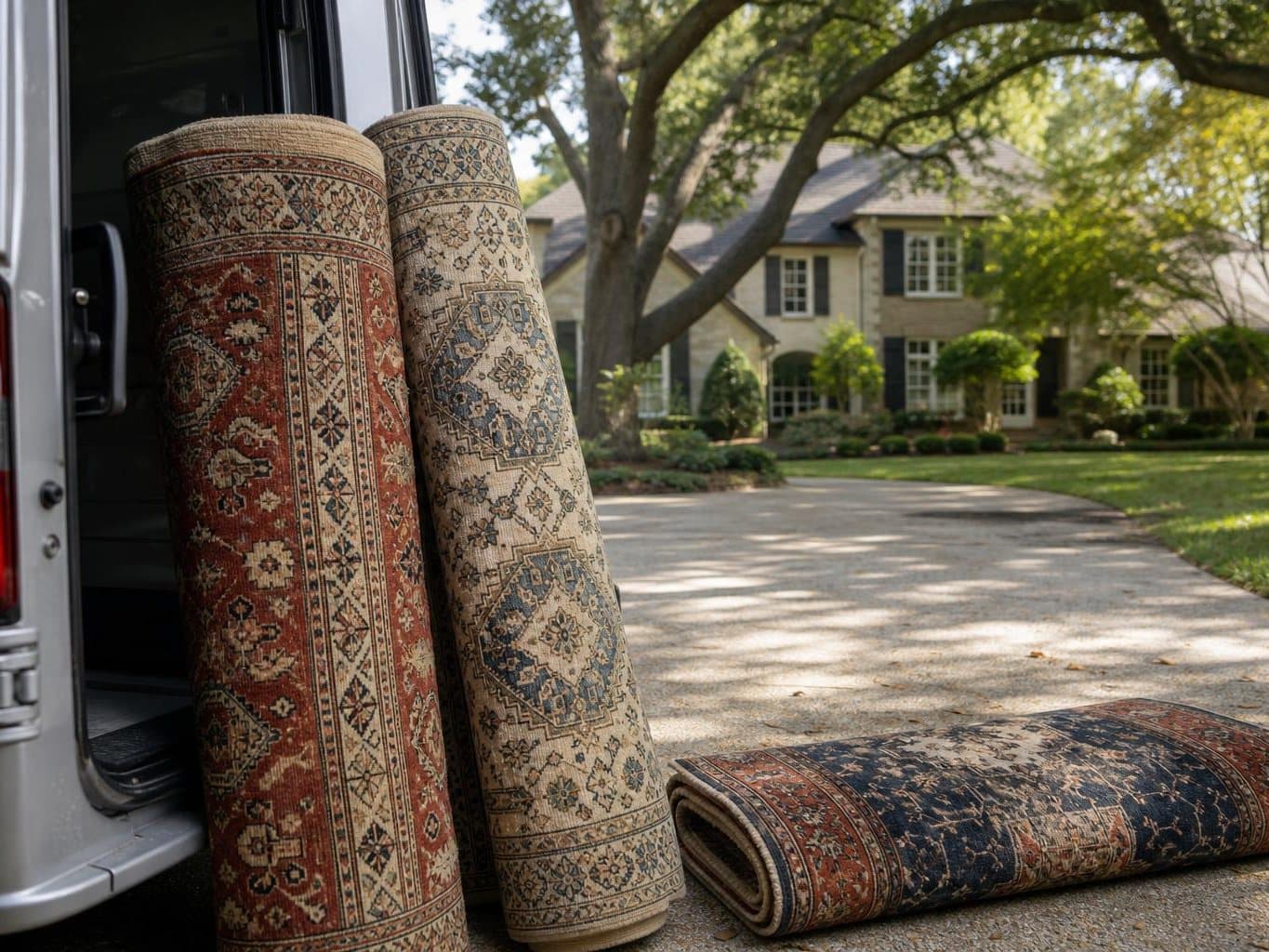
We are based in Grass Valley and Auburn is a short run down the highway. The question Auburn customers reasonably ask is whether a firm from another county will actually turn up for one rug, and the answer is that we have Placer County customers who have been with us for years.
If you have several rugs, or a rug and some carpet, it is worth doing together — that is true anywhere but it is more true at this distance. We cover Auburn, Meadow Vista and Colfax.
Fringe, and the underside
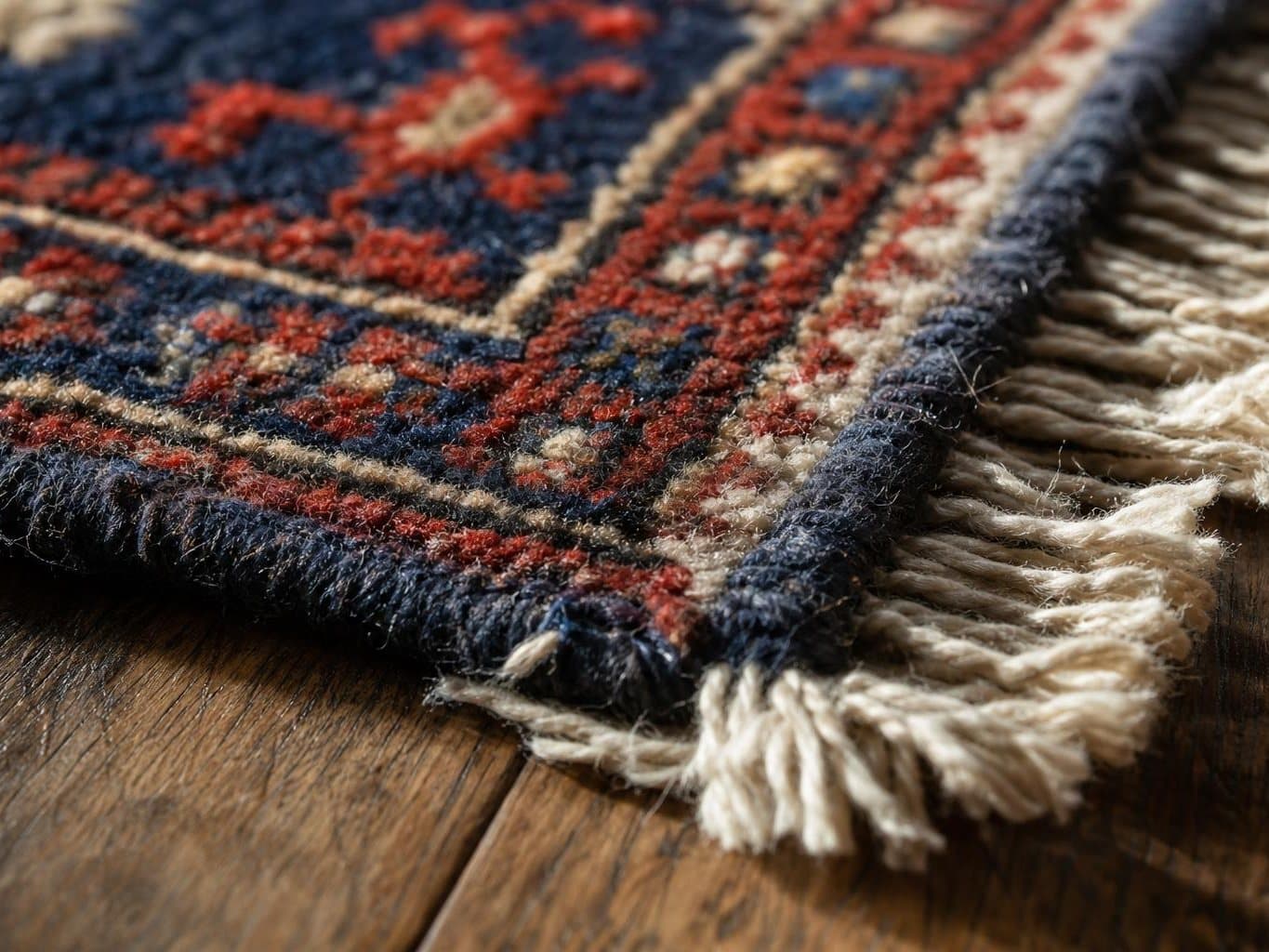
Fringe greys before the rug does. It is usually cotton where the rug is wool, it sits on the floor where shoes land, and it frays faster than anything else, so it is handled separately from the body.
The underside matters more than people expect. Grit works down through the pile and sits against the floor, grinding at the foundation every time somebody crosses the room. A rug that is only ever surface cleaned wears out from beneath while the top still looks presentable.
What cannot be saved
Most rugs improve more than their owners expect. Some do not, and it is cheaper to hear that first.
Dry rot
A rug stored damp loses its foundation strength. It can look sound and then split along a fold.
Dyes that bleed
Common in older hand-made rugs, and irreversible once a colour has moved.
Urine in the foundation
Repeated accidents in one place rot the backing and can permanently alter the dye around them.
Wear already done
Cleaning lifts soil. It does not put back pile that grit has already cut away.
What kind of rug is it
What a rug is made of decides almost everything about how it is handled. If you are not sure, a photo of the back usually says more than the front does.
Wool
The most common good rug in a Placer County house. Wool holds soil deep in the pile and is sensitive to heat and to the wrong chemistry, but it cleans beautifully when it is treated properly.
Cotton and synthetic
More tolerant of moisture. Usually the flat-weaves, runners and kitchen rugs that take the heaviest traffic and get cleaned most often.
Hand-knotted and antique
Treated as the investment they are. Age, dye and foundation condition all matter more than the pattern does.
Silk and very delicate
Silk and very fine rugs are handled case by case. Send photographs before booking. Some we will take, and some are genuinely better with a specialist washer — and we would rather tell you that than learn something expensive on your rug.
Pet odor in a rug
A rug is the hardest of the three things we clean to deodorise, because urine does not stop at the pile. It passes through to the foundation and then into whatever the rug is lying on, so a rug can be cleaned, look perfect, and still smell — and so can the floor underneath it.
Say the rug smells rather than that it is marked. On a rug it changes not just the method but whether the job is worth doing at all, and that is a conversation to have first.
Keeping it good afterwards
Vacuum both sides. Grit that works down through the pile sits against the floor and grinds at the foundation, and it is the single biggest cause of a rug wearing out early.
Rotate it once or twice a year so the traffic path and the sunlight move. Use a pad underneath, which keeps the rug from creeping and takes some of the abrasion. And deal with spills by blotting, never rubbing, with white towels only.
How a rug is actually cleaned
It starts dry. Most of what is in a rug is dry soil, and the more of it that comes out before any moisture is introduced, the better the result and the less water the rug has to cope with. Skipping that step is the difference between cleaning a rug and making mud in it.
Then testing — an inconspicuous corner, to see how the dyes behave — followed by the cleaning itself, matched to what the rug is rather than to a standard recipe. Fringe is handled separately because it is usually cotton where the rug is wool.
Drying matters as much as washing. A rug left damp is a rug developing a smell and, if it goes on long enough, dry rot in the foundation.
What we see most
Dulled colour that owners assume is fading and is usually just soil — this is the one that surprises people most when it lifts. A grey traffic path across the middle, from the same grit that cuts the pile. Grey fringe, which ages a rug more than anything else its size.
Pet accidents, which are an odor problem before they are a stain problem. And moth damage in wool rugs that have been stored or left under furniture, which is not a cleaning problem at all but is worth knowing about before you put the rug back down.
What it costs
Rugs are quoted individually rather than by the square foot, because two rugs of the same size can be completely different jobs. What moves the figure is what the rug is made of, how soiled it is, whether the fringe needs work, and whether there is odor to deal with as well as dirt. Send a photo of the front and the back through the quote form and we can usually give you a realistic range without a visit.
Since 2003
We would rather tell you a rug is not worth cleaning than take the money and hand it back the same.
Family owned, Nevada County residents for more than twenty-seven years, and referred by top Realtors and interior designers.
Common questions
Do you collect the rug, or clean it here?
It depends on the rug. Small synthetic rugs can usually be done in the home. Wool, hand-knotted and heavily soiled rugs come back with us for controlled washing and drying, which takes a few days. For Auburn we collect and return rather than asking you to drive anything up the hill.
It is an old Oriental rug. Will you take it?
Usually, and it is worth a conversation before anything else happens. Hand-knotted rugs vary enormously in how they were dyed and how sound the foundation still is, so what we can promise depends on the rug in front of us rather than on a category. Send a photo of the front and the back and we will tell you what we think.
Will the colours run?
It is the right worry. Dyes in older and hand-made rugs can bleed when they meet water or the wrong chemistry, and once a red has moved into a cream border it does not move back. We test an inconspicuous corner first, and if a rug is going to bleed we would rather find out there than across the middle of it.
There are small holes in it. Is that moths?
Quite possibly, especially in a wool rug that has been stored, or that sits under furniture where it is dark and undisturbed. Moth damage is not a cleaning problem and cleaning will not reverse it, but it is worth identifying, because active moths will keep going and can move to other wool in the house.
Is it worth cleaning an inexpensive rug?
Sometimes not, and we would rather say so. A machine-made rug that cost less than the cleaning will is a straightforward decision. Where it is worth it is when a rug is either genuinely good, or genuinely loved — and those are not always the same rug.
How long does it take to dry?
A wool rug holds more water than carpet does, so allow the best part of a day, and longer in winter. A rug never goes back down damp — that is exactly how odour and dry rot start.
Have a rug looked at
Send a photo of the front and the back through the quote form, or call and describe it. We also clean carpet and upholstery in Auburn.